

On one of the hottest days of the year, chaos engulfed London’s rail network as hundreds of passengers were forced to evacuate stranded trains and walk along railway tracks under the blazing sun. The incident, which occurred near Loughborough Junction in south London, brought Thameslink services to a standstill, leaving many commuters sweltering in carriages without air conditioning or power.
A Heatwave Turns to a Travel Nightmare
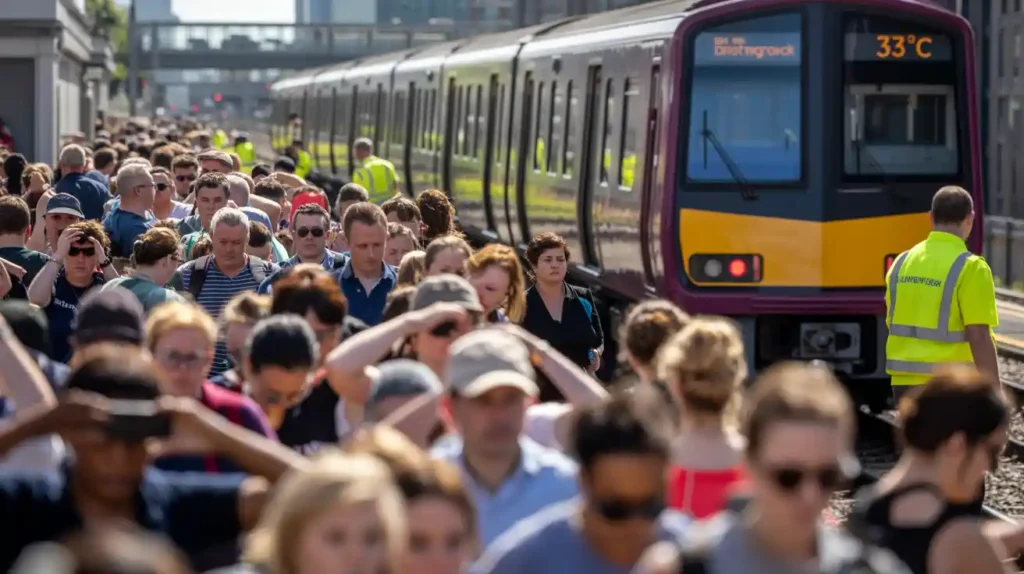
Saturday marked the hottest day of 2025 so far, with temperatures soaring above 33°C in parts of southern England, particularly Surrey. As the heatwave gripped the capital, rail services buckled under pressure. A major fault on a Thameslink train near Loughborough Junction triggered widespread disruption, trapping at least three trains outside station platforms.
With power lost, including to air conditioning systems, conditions inside the stationary carriages quickly became unbearable. Passengers reported feeling trapped inside what felt like ovens, with no ventilation and no clear communication about what was happening. Many endured over two hours in these sweltering conditions before emergency evacuations were organised.
Passengers Forced to Walk the Tracks
Social media was soon flooded with videos and photos of frustrated travellers walking along the train tracks, guided by emergency responders. Among those sharing their experience was Angela Lewis, who posted on X (formerly Twitter):
“After nearly two hours on the stuck train to Gatwick we are abandoned outside.”
She later questioned the handling of the situation, writing:
“Was it entirely necessary to keep us stuck for nearly two hours in an overheated carriage? We should have been out within 30 minutes max.”
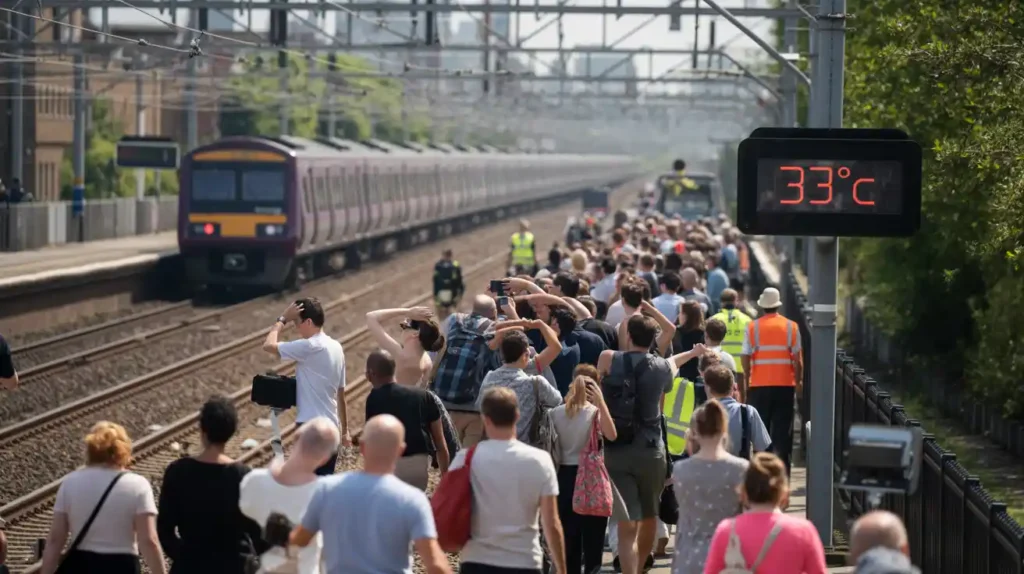
Others expressed similar outrage. One passenger messaged Thameslink directly:
“You will have hell to pay. We’ve been stuck on this hot and humid train for over an hour.”
Thameslink’s Response and Apology
Thameslink, the operator responsible for the disrupted services, responded publicly, acknowledging the severity of the situation. A spokesperson stated:
“Earlier today, a fault on a train near Loughborough Junction brought all services to a halt in the area, including three trains stuck outside stations. Due to the loss of power and air conditioning in extreme heat, we mobilised teams from across Sussex and Kent to safely evacuate passengers.”
The company admitted the experience would have been “difficult and uncomfortable” and issued a formal apology:
“We are truly sorry. This situation was unacceptable, and we appreciate how distressing it must have been for everyone on board.”
Network Rail, which manages the infrastructure, and Govia Thameslink Railway, which operates the trains, both offered their apologies for the disruption and the distress it caused.

Heat Warnings and Extreme Weather
The train disruption coincided with intense weather conditions across the UK. The Met Office confirmed that temperatures had exceeded 33°C in Surrey, officially making it the hottest day of the year. The UK Health Security Agency had already issued an amber heat-health alert ahead of the weekend—the first such alert since September 2023—covering all regions of England.
The Met Office also issued a yellow warning for thunderstorms stretching from south-east Scotland to parts of the Midlands, Wales, and Yorkshire. The warning, in place until 3am Sunday, predicted up to 40mm of rainfall in two hours, raising fears of flash flooding in some areas.
The combination of heat and severe weather added strain on public infrastructure and emergency services, especially transport networks already under pressure from summer travel.
The Broader Impact and Public Reaction
Saturday’s events reignited public frustration with the UK’s rail system, especially during extreme weather. The lack of contingency planning for heat-related incidents became a focal point for criticism, with many passengers questioning why air conditioning and evacuation protocols had failed so badly.
While train breakdowns are not uncommon during UK heatwaves, the fact that passengers were left in such discomfort for extended periods—some without water or updates—sparked widespread outrage. Several commuters noted the apparent lack of preparedness, asking why no alternative air flow or emergency supplies were available on board.
Calls have since grown for Thameslink and Network Rail to improve both their communications and their emergency response capabilities. Rail watchdogs and passenger advocacy groups echoed public concerns, urging an investigation into the incident and calling for updated protocols to better address extreme weather scenarios.
Lessons for the Future?
This weekend’s ordeal serves as a stark reminder of how vulnerable Britain’s rail infrastructure remains to climate extremes. With summers growing hotter due to climate change, rail operators face increasing pressure to adapt. From expanding shaded waiting areas and improving ventilation systems to reinforcing rails and power systems, more robust measures are likely to become necessary.
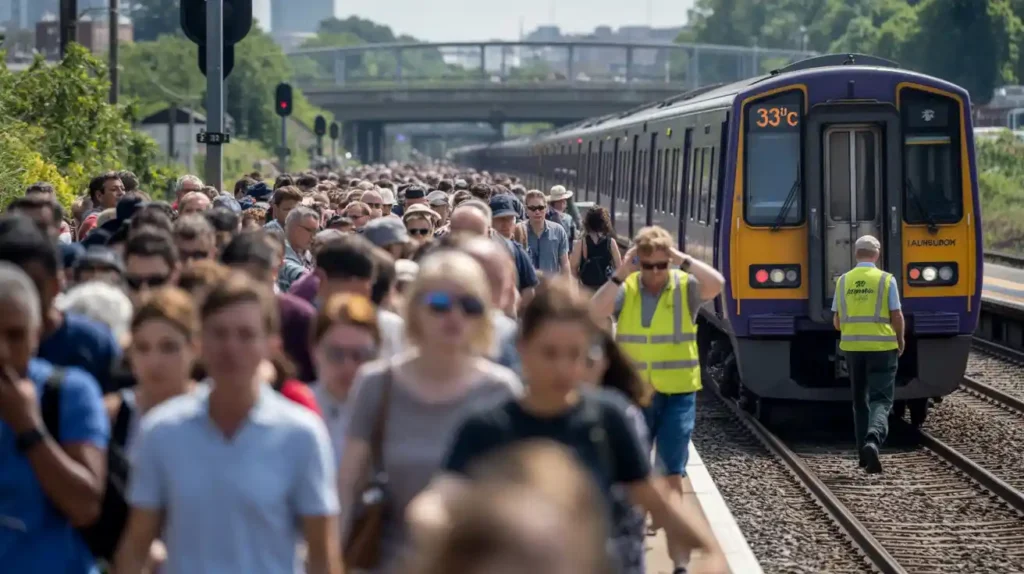
In the meantime, passengers are being advised to check travel updates before setting out during extreme heat, carry water, and be prepared for delays during peak summer conditions. However, as many noted on social media, travellers should not be expected to endure these conditions due to poor planning and lack of readiness.
Moving Forward
While services resumed later in the evening, the fallout from Saturday’s train chaos is far from over. Thameslink will face scrutiny over its handling of the crisis, and it remains to be seen whether formal investigations will follow.
What’s clear is that the incident has shaken public trust—again—in a system often criticised for unreliability during periods of strain. Whether it’s snow, leaves, or now heat, Britain’s railways seem persistently caught off guard.
In the end, the scenes of hundreds of passengers walking railway tracks under the blazing sun may well become one of the defining images of a summer beset by transport disruption—and a call to action for meaningful change in how the country prepares for rising temperatures.


2 thoughts on “London Train Evacuated Amid 33°C ‘Heat Hell’: Hundreds of Passengers Walk Tracks After Major Disruption”