
Trump’s Proposed
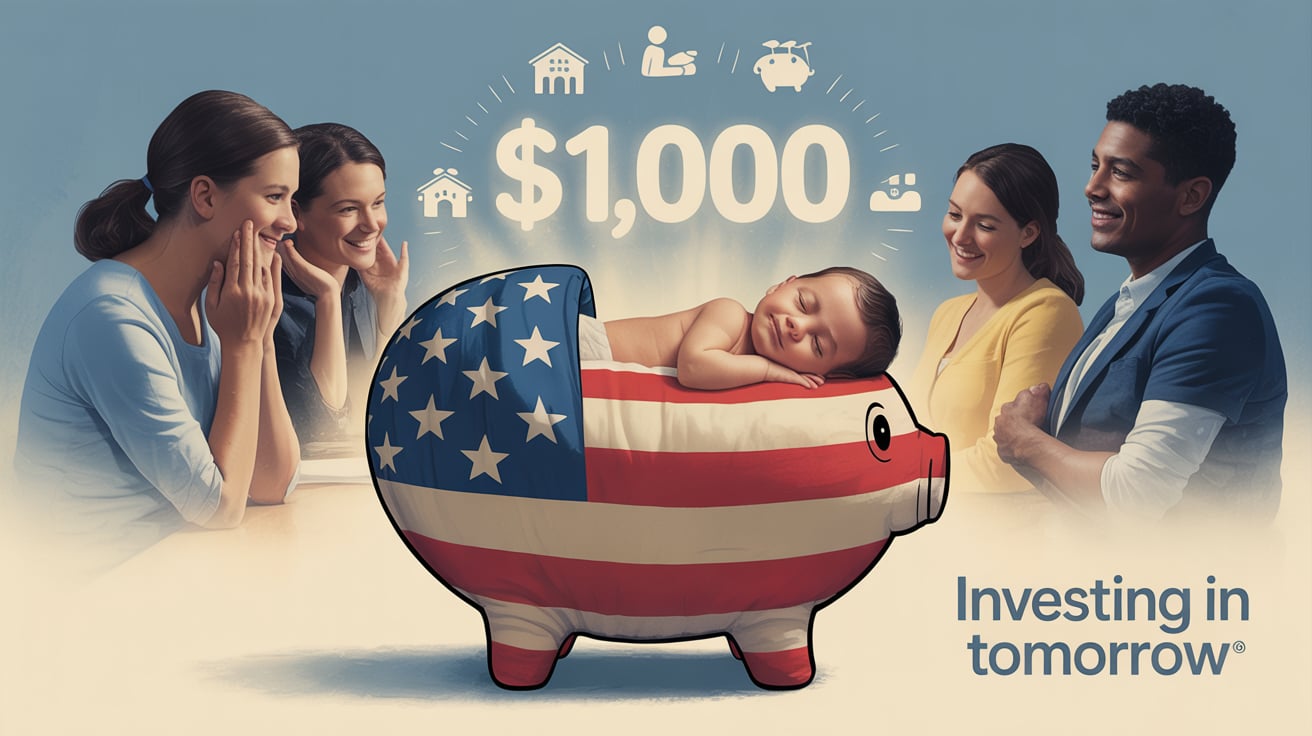
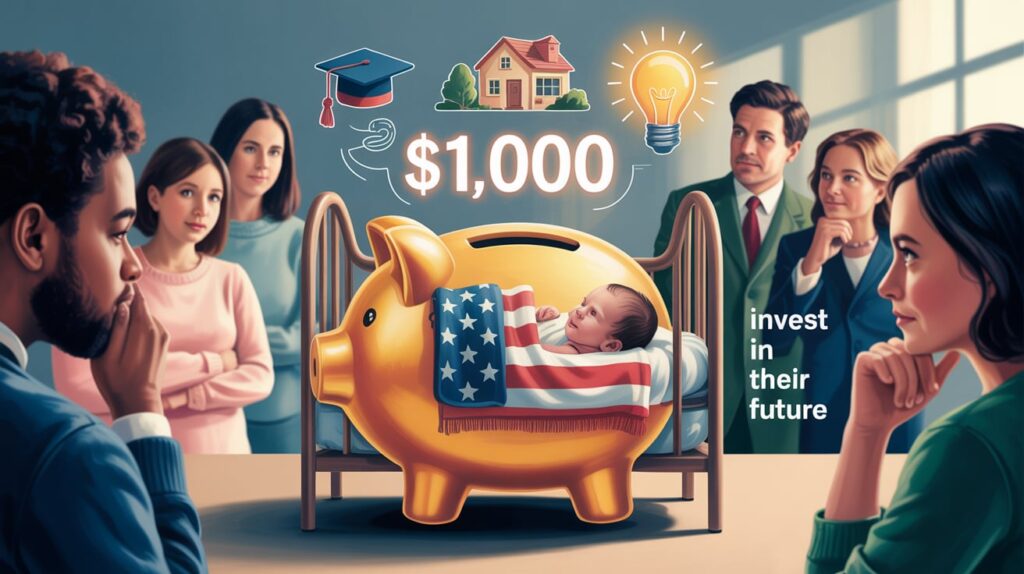
At first glance, the so-called “Trump accounts” — a plan to give parents of newborns $1,000 to invest for their child’s future — sound like a win for families.
“This is a pro-family initiative that will help millions of Americans harness the strength of our economy to lift up the next generation,” former President Donald Trump said during a White House event Monday. “They’ll really be getting a big jump on life.”

The program, part of the House-passed “One Big Beautiful Bill Act” now under Senate review, would run as a five-year pilot and aims to help a new generation build long-term savings for education, housing, or starting a business.
While the proposal has some appeal, experts warn it falls short of fully supporting the families who need help most.
“This proposal meets some, but not all, of the best practices from decades of research on early wealth-building programs,” said Madeline Brown, senior policy associate at the Urban Institute.
How the Program Would Work
The plan, originally called MAGA accounts (“Money Account for Growth and Advancement”), would grant $1,000 in a government-funded investment account for each U.S. citizen baby born between January 1, 2025, and December 31, 2028.
To qualify, both the baby and parents must have Social Security numbers.
Families — and others, such as nonprofits — could contribute up to $5,000 annually per child, with potentially higher caps for nonprofits. All funds must be invested in low-cost, diversified U.S. stock index funds. Withdrawals are not permitted until the child turns 18, and any investment growth is tax-deferred.
Funds could be used for qualified expenses such as higher education, post-secondary credentialing, buying a home, or starting a small business. Qualified withdrawals would be taxed at the lower capital gains rate. However, using the money for non-approved purposes before age 30 would result in ordinary income taxation plus a 10% penalty.
What the Program Gets Right
The Trump accounts proposal earns praise in two key areas:
- Universal and automatic enrollment: Parents wouldn’t need to apply, making the program inclusive by default. According to Brown, opt-in programs often see higher uptake among wealthier families who are more aware and financially prepared to participate.
- Federal help from birth: The concept mirrors the idea of “baby bonds,” publicly funded trust accounts that aim to narrow wealth gaps starting at birth. While some states and cities have launched similar efforts, there’s never been a national version — until now.
Where It Falls Short
Despite good intentions, critics argue the program’s design benefits wealthier families the most:
- Flat funding makes it regressive: Every family receives the same $1,000 regardless of income or need. That structure disproportionately benefits higher-income households, which are better positioned to contribute additional funds and grow the accounts over time.
A March report by the Milken Institute projected that the initial $1,000 invested in a broad equity index could grow to about $8,300 over 20 years. Families able to contribute more would see far larger balances — while low-income families unable to save beyond the government’s contribution may fall further behind.
“The structure favors families who already have the means to save. It’s regressive by design,” said Michelle Dallafior, senior VP of tax and budget at First Focus for Children, which has criticized several provisions of the bill for disadvantaging low-income families.
- Restrictive withdrawal rules: Brown also points to the program’s complexity. Only 50% of the account’s value could be withdrawn between ages 18 and 25, and there are no exceptions for emergencies — a sharp contrast with best practices that call for flexibility and ease of access. Early, non-qualified withdrawals would trigger taxes and penalties.
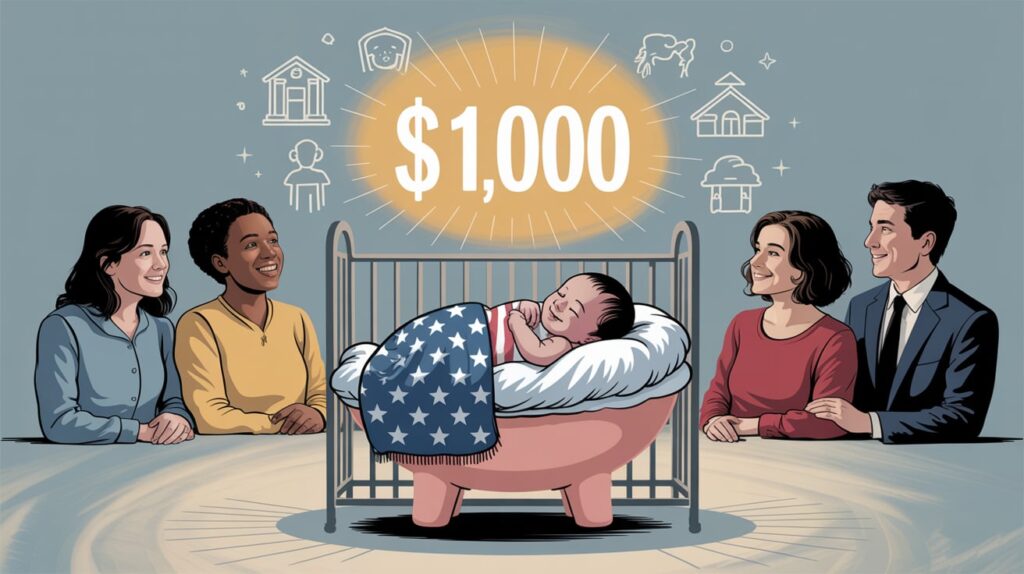
Trump’s proposed “baby bonus” accounts could help families jumpstart savings — especially for those already in a position to build wealth. But without adjustments to make the program more progressive and flexible, its impact may be limited for the families who need support the most.
Conclusion
While the $1,000 “Trump accounts” proposal marks a notable step toward encouraging long-term savings from birth, its current structure risks widening the very wealth gap it aims to address. By offering the same initial investment to all families—without income-based adjustments or built-in flexibility—the program leans more toward benefiting those already positioned to save and invest.
To truly serve as a generational game-changer, the policy would need to be more inclusive of low-income families, easier to navigate, ad better aligned with the financial realities many Americans face. As the Senate debates the “One Big Beautiful Bill Act,” lawmakers have an opportunity to refine the plan so it delivers on its promise: to give every child, regardless of background, a fairer shot at financial security.

2 thoughts on “How Trump’s Proposed $1,000 ‘Baby Bonus’ Accounts Would Work — and Who Stands to Gain the Most”