
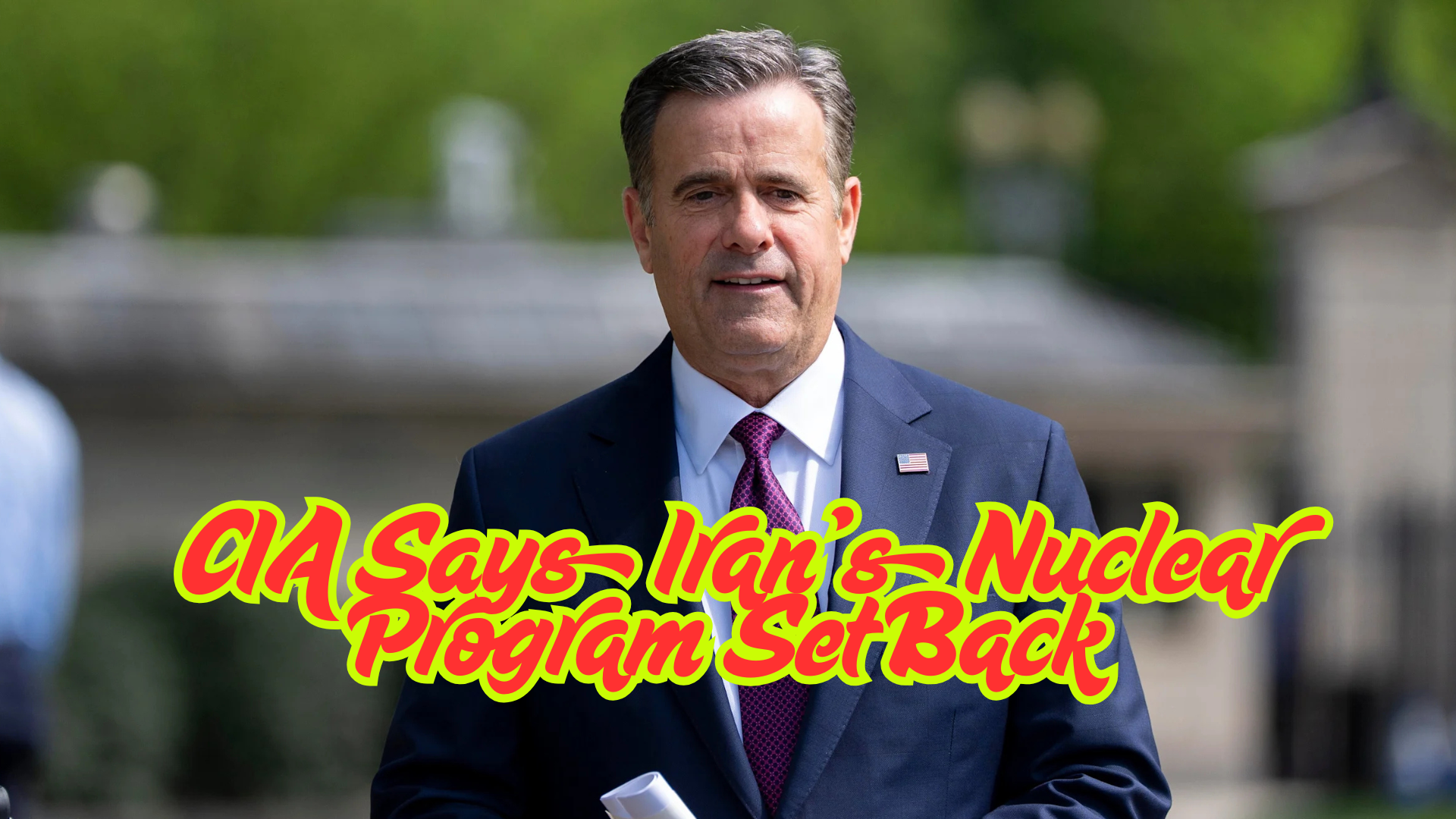
The CIA and the Office of the Director of National Intelligence released statements Wednesday asserting that recent U.S. airstrikes have caused severe damage to Iran’s nuclear program, potentially delaying it by years. The comments came amid growing scrutiny over conflicting intelligence assessments and political debate following the strikes ordered by former President Donald Trump.
President Trump authorized strikes on three key Iranian nuclear sites — Natanz, Fordow, and Esfahan — late Saturday, coinciding with Israel’s own ongoing campaign targeting Iranian military infrastructure. While an early assessment from the Defense Intelligence Agency (DIA) suggested the nuclear program had only been delayed by a few months, Trump publicly criticized that report as inaccurate.
In a statement released Wednesday, CIA Director John Ratcliffe countered the DIA’s view, citing new intelligence from what he called “a historically reliable and accurate source.” According to Ratcliffe, this intelligence indicates that several major Iranian nuclear facilities were completely destroyed and will likely need to be rebuilt from scratch — a process that could take years.
“The intelligence community now assesses Iran’s nuclear program has been severely damaged by the recent, targeted strikes,” Ratcliffe said. He also emphasized that the agency continues to collect additional intelligence and will update policymakers — and the public — as new information emerges.
Director of National Intelligence Tulsi Gabbard echoed those conclusions on social media, stating that “new intelligence confirms what President Trump has stated numerous times: Iran’s nuclear facilities have been destroyed.” Gabbard noted that rebuilding the three sites would be a multiyear endeavor, not a matter of months as the DIA’s preliminary report had suggested.
Although neither Ratcliffe nor Gabbard specified whether the intelligence came from Israeli or other foreign sources, a U.S. intelligence official confirmed to CBS News that it was American in origin. The official declined to comment on the confidence level of the assessment.
Notably absent from the CIA and DNI statements were answers to lingering questions raised by lawmakers and nuclear nonproliferation experts — such as whether Iran managed to remove enriched uranium before the strikes. One source familiar with the DIA assessment said that some enriched material was likely moved prior to the bombings. President Trump, however, disputed that during a press conference in the Netherlands following the NATO summit, saying, “We think we hit them so hard and so fast, they didn’t get to move.”
Trump also revealed that talks between the U.S. and Iran are expected “next week,” though the format remains uncertain. Steve Witkoff, the U.S. special envoy to the Middle East, is expected to lead the negotiations, with Secretary of State Marco Rubio and Vice President JD Vance reportedly becoming more involved as diplomatic efforts continue.
Ratcliffe and Gabbard were originally scheduled to brief the Senate in a classified session on Tuesday, but that meeting has been pushed to Thursday. A separate House briefing is planned for Friday. It’s unclear whether both intelligence leaders will participate in both sessions.
Both Ratcliffe and Gabbard also condemned the media leak of the DIA’s initial assessment, which the agency itself admitted was issued with “low confidence” and would be updated as more intelligence becomes available.
According to sources familiar with the DIA report, two Iranian facilities — including the underground Fordow site — had their entrances sealed by the strikes. However, the assessment also said Iran could eventually reestablish operations by excavating the entrances and restoring critical infrastructure like water and electricity, a process that could take less than a year.
Despite this, Trump has remained adamant that the impact of the strikes was far greater. “They said it could be limited or it could be very severe. They really didn’t know,” he said, casting doubt on the DIA findings.
Secretary of Defense Pete Hegseth reinforced Trump’s stance, saying, “If you want to make an assessment of what happened at Fordow, you’d better get a big shovel and go really deep, because Iran’s nuclear program is obliterated.”
General Dan Caine, Chairman of the Joint Chiefs of Staff, confirmed that a full damage assessment is still underway but said initial reports indicated “extremely severe damage and destruction” at all three sites.
Hegseth is scheduled to lead a press briefing Thursday morning, which President Trump claimed would be “both interesting and irrefutable.
3 thoughts on “CIA Says Iran’s Nuclear Program Set Back “Years” by Trump-Ordered Airstrikes”