
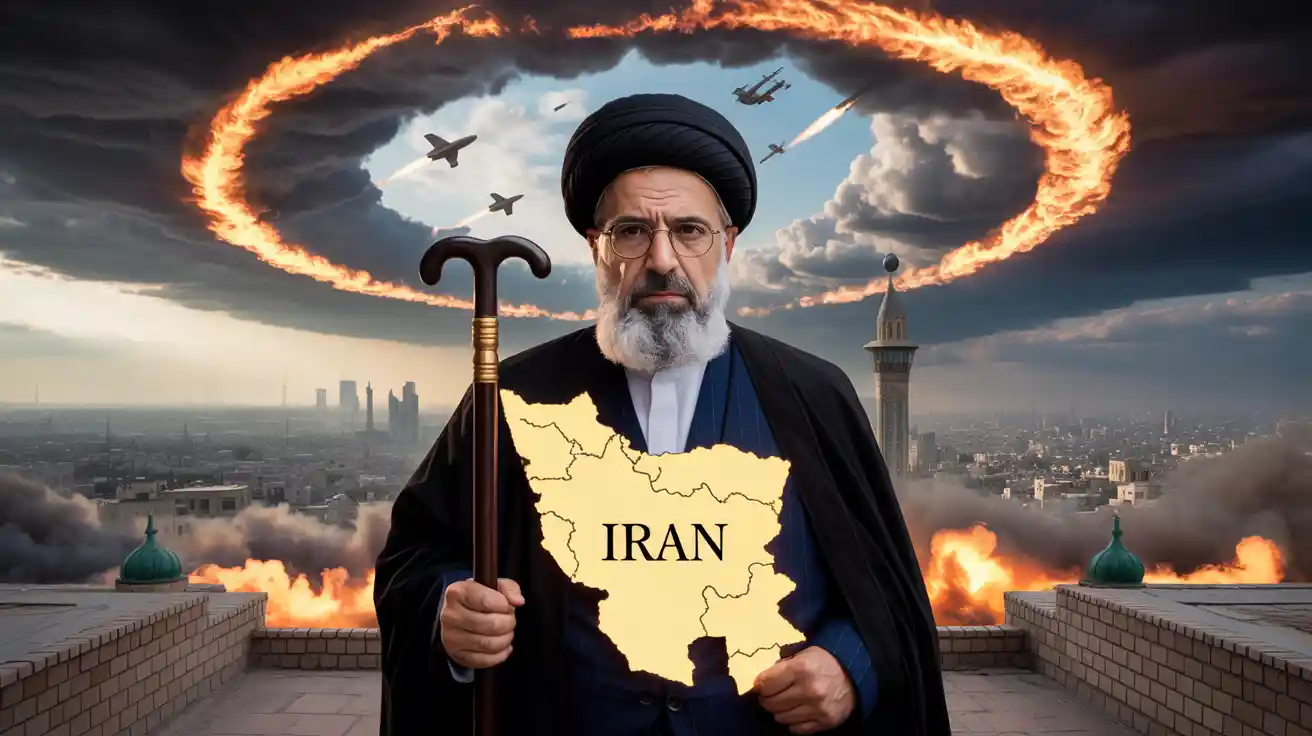
CAIRO (AP) — For more than three decades, Ayatollah Ali Khamenei has maintained an iron grip over Iran, quashing dissent and elevating the Islamic Republic into a regional power. But now, at age 86, the supreme leader faces perhaps the most severe test of his rule: a relentless Israeli air campaign that has shattered Iran’s military leadership and put its nuclear ambitions at risk.
The stakes are unprecedented. Israel, emboldened by regional shifts and international ambivalence, now appears to have free reign over Iran’s skies. Its operations have targeted not only Iran’s nuclear infrastructure and senior military leaders but have also escalated rhetoric to a new level. Israeli Defense Minister Yoav Gallant recently declared that Khamenei “cannot continue to exist.”

In response, Khamenei is caught between two high-risk options. One path would see Iran escalate its retaliatory strikes against Israel—likely triggering even more devastating consequences. The other would require pursuing a diplomatic solution that might involve scaling back the nuclear program that Khamenei has spent years fortifying. Either choice would come at significant political and strategic cost.
In a defiant televised address this week, Khamenei warned that “the Iranian nation is not one to surrender” and issued a stark warning to Washington: any U.S. intervention would lead to “irreparable damage.”
A Legacy of Control and Transformation
When Khamenei succeeded Ayatollah Ruhollah Khomeini in 1989, many questioned his legitimacy. Then a mid-ranking cleric with limited religious credentials, Khamenei lacked the revolutionary charisma and theological clout of his predecessor. But over the decades, he has defied those doubts—ruling for more than three times as long as Khomeini and fundamentally reshaping Iran’s political and military institutions.
Under his leadership, the Islamic Republic doubled down on clerical rule. He fortified the role of Shiite clerics—the so-called “mullahs”—in every aspect of governance, enshrining himself as the final authority on both spiritual and state matters.
But perhaps his most consequential move was empowering the Islamic Revolutionary Guard Corps (IRGC). Khamenei built the Guard into a military-industrial powerhouse that not only dominates Iran’s armed forces but also holds vast influence over its politics and economy. The IRGC’s Quds Force, its international arm, created the “Axis of Resistance”—a network of pro-Iranian militias and proxy groups stretching from Lebanon to Yemen.
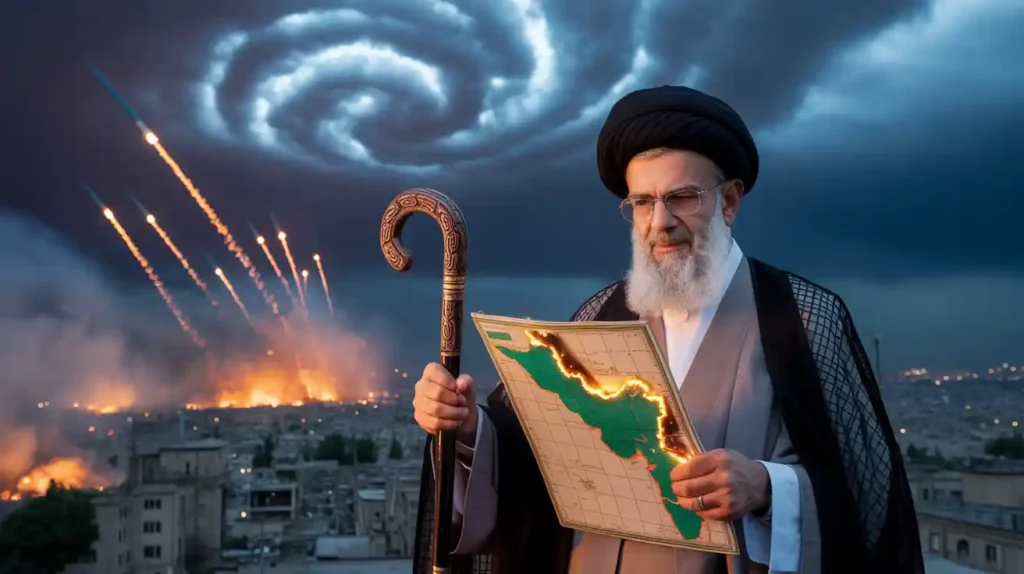
In return for this autonomy, the Guard has remained fiercely loyal to Khamenei, acting as his enforcer both domestically and abroad.
Crushing Dissent at Home
Despite his external successes, Khamenei’s rule has been marked by repeated domestic unrest—and a relentless campaign to suppress it.
The reformist wave of the late 1990s and early 2000s posed the first serious internal threat. Reformists pushed to increase the power of elected bodies, challenging the theocratic system. Khamenei responded by consolidating control, mobilizing unelected religious institutions to block reforms and disqualify opposition candidates.
Protests erupted repeatedly in the following years. In 2009, millions took to the streets following a disputed election. Economic discontent fueled demonstrations in 2017 and 2019. And in 2022, the death of 22-year-old Mahsa Amini after her arrest for violating dress code rules ignited a new wave of anger—particularly among young Iranians.
Each time, security forces crushed dissent with brutal efficiency. Hundreds were killed; thousands arrested. Human rights groups documented torture and sexual violence against detainees. And yet, despite the repression, the unrest revealed deep disillusionment with the regime’s clerical rule, its corruption, and its failure to deliver economic security.
In response, authorities occasionally eased enforcement of social restrictions—but never relented on political control.
Expanding Iran’s Reach in the Region
When Khamenei took office, Iran was still reeling from the devastating eight-year war with Iraq. Isolated and weakened, it had little regional influence. Over the next three decades, that changed dramatically.
The U.S.-led invasion of Iraq in 2003 opened a major opportunity. With Saddam Hussein ousted, Iranian-backed Shiite parties and militias filled the vacuum, turning Iraq into a vital part of Iran’s regional alliance.
That “Axis of Resistance” soon grew to include Hezbollah in Lebanon, the Assad regime in Syria, the Palestinian militant group Hamas, and Yemen’s Houthi rebels. By the mid-2010s, Iran had extended its influence across much of the Middle East—right up to Israel’s borders.
The 2015 Iran nuclear deal gave Khamenei a temporary respite from global sanctions, but he never fully committed to the agreement’s spirit. Even after the U.S. withdrew in 2018, Khamenei doubled down on the nuclear program, using it as both leverage and a symbol of resistance.
The Axis Cracks
In 2023, that regional strategy began to unravel.
Hamas’s surprise October 7 attack on Israel marked a turning point. The assault triggered a massive Israeli retaliation that devastated Gaza. But more importantly, it reshaped Israeli military policy. No longer content with containing Iranian proxies, Israel shifted to a strategy of total dismantlement.
In Lebanon, Hezbollah was pummeled by weeks of Israeli bombardment. A covert Israeli operation using booby-trapped devices embedded in communications equipment stunned the group’s leadership. In Syria, Iran suffered its most strategic loss: Bashar al-Assad—long a linchpin of the Axis—was overthrown in December by Sunni rebels, installing a government hostile to both Tehran and Hezbollah.

With Hamas battered, Hezbollah wounded, and Syria lost, Iran’s regional influence has taken a historic blow. And Israel, newly assertive, is no longer holding back.
A Supreme Decision
Khamenei is now confronted with a historic dilemma. Escalating military action could invite further Israeli—and possibly U.S.—reprisals, threatening the regime’s very survival. But retreating into diplomacy could undermine the very pillars of his legacy: the nuclear program, the Revolutionary Guard, and Iran’s image as a defiant regional power.
At home, his legitimacy is under renewed scrutiny. Abroad, his influence is shrinking. And in the skies over Iran, Israeli drones and warplanes continue their campaign.
For a man who has survived revolutions, wars, and mass uprisings, this may be the supreme leader’s final reckoning—with his rule, and with history.
One thought on “Iran’s Supreme Leader at a Crossroads as Israeli Strikes Escalate”