
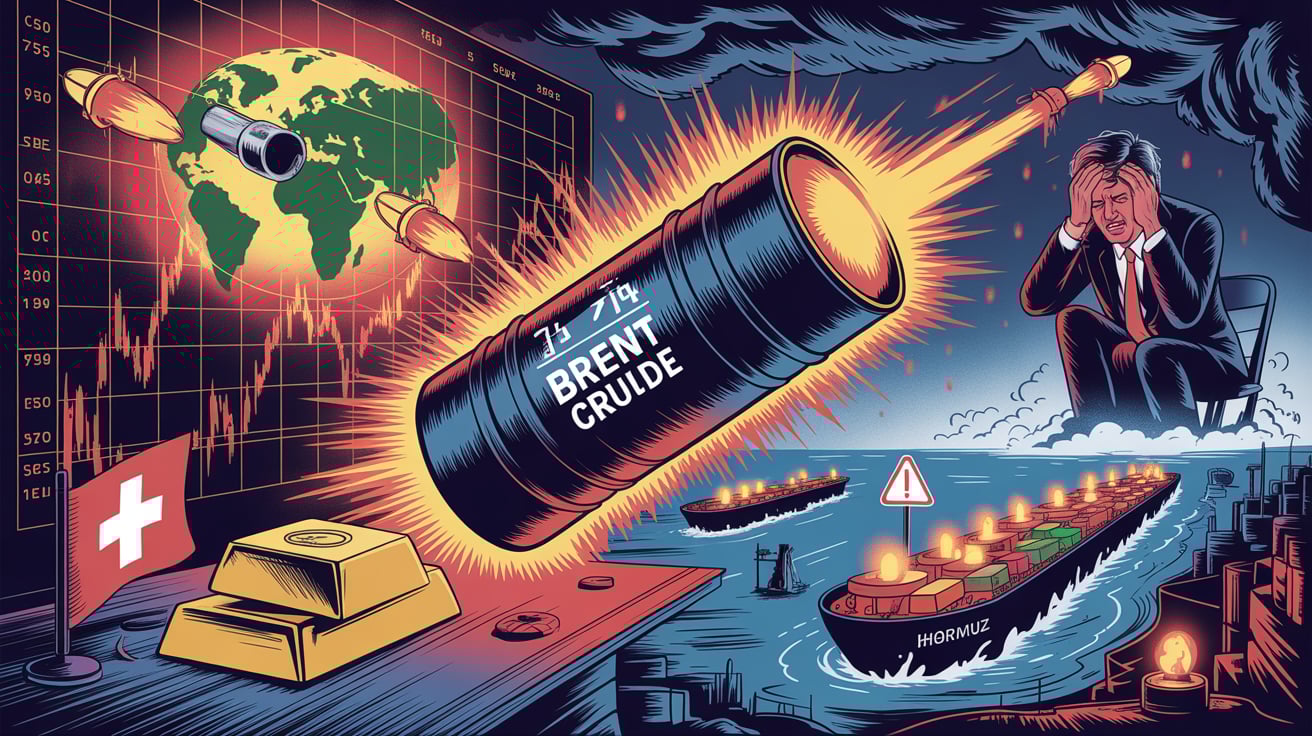
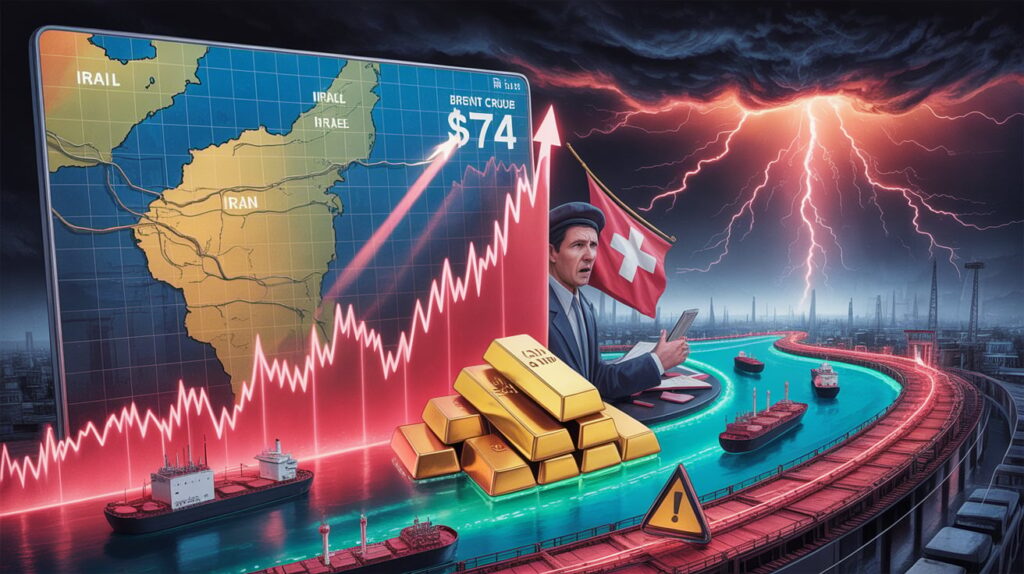
Global oil prices surged on Friday after Israel confirmed it had carried out airstrikes on Iranian targets, marking a dramatic escalation in Middle East tensions. Brent crude—the international oil benchmark—jumped over 10% at one point, hitting its highest level since January, before retreating slightly. By the close of trading, prices were still up more than 7%, settling at $74.23 a barrel.
The price spike triggered immediate concern in energy markets, with traders fearing the fallout from a potential full-scale conflict between two of the region’s key players. Any disruption to oil supplies from the Middle East—home to a significant portion of global production—could have ripple effects across the world economy.

Oil prices influence more than just the cost at the pump. They impact everything from food and transportation to manufacturing costs. And while Friday’s surge was sharp, prices remain more than 10% lower than they were this time last year and still far below the highs seen in early 2022, when Russia’s invasion of Ukraine drove crude prices above $100 per barrel.
Market Turmoil and Safe-Haven Rush
The geopolitical shockwaves rippled through global financial markets. Major stock indexes in Asia and Europe ended the day in the red. Japan’s Nikkei fell 0.9%, while London’s FTSE 100 slipped 0.39%. U.S. markets followed suit, with the Dow Jones Industrial Average tumbling 1.79% and the S&P 500 shedding 0.69%.
In contrast, so-called “safe haven” assets gained ground. Gold climbed 1.2% to $3,423.30 per ounce—its highest level in nearly two months—while the Swiss franc also strengthened. These traditional stores of value often attract investors during periods of heightened uncertainty and conflict.
Israeli Strikes and Iranian Response
The market reaction followed Israeli military action targeting Iran’s nuclear facilities and senior military leadership. In response, Iran reportedly launched around 100 drones toward Israel, according to statements from the Israeli Defense Forces (IDF).
The scale and nature of the strikes have raised alarms among analysts. Vandana Hari of Vanda Insights warned the situation was “explosive,” though she added it could still be defused, as seen in previous flare-ups in April and October last year. However, she cautioned that the conflict also holds the potential to “spiral out into a bigger war that disrupts Mideast oil supply.”

Capital Economics analysts echoed those concerns. They noted that if Iran’s oil infrastructure were to be directly targeted, Brent crude could spike to between $80 and $100 per barrel. However, they also predicted such a surge would likely be short-lived, as other oil producers would ramp up output to stabilize the market.
Potential Impact on Consumers
Back in the UK, the RAC—Britain’s motoring association—urged caution, saying it was “too soon” to predict the impact on petrol prices. RAC spokesman Rod Dennis emphasized that retail fuel prices would depend on whether wholesale costs stay elevated and how fuel retailers choose to adjust their profit margins.
The Strait of Hormuz Factor
One of the most critical points of concern is the Strait of Hormuz—a narrow maritime passage between Iran and Oman, which acts as a chokepoint for roughly 20% of the world’s oil supply. An estimated several dozen oil tankers pass through the strait daily, transporting energy supplies from Gulf producers to markets across the globe.
Any disruption to this route could severely hamper global oil flows. In an extreme scenario, analysts warn Iran could attempt to block or attack vessels in the strait, cutting off millions of barrels of oil per day from the global market.
What’s Next?
“The initial market reaction reflects a rush to price in risk,” said Saul Kavonic, head of energy research at MST Financial. “But over the next day or two, traders will have to assess how far this conflict might escalate.”
For now, investors and analysts alike are watching closely as developments unfold. The coming days could determine whether the oil price rally is a short-term blip—or the beginning of a broader energy and economic shock.
Conclusion
The sharp rise in oil prices following Israel’s strike on Iran underscores how vulnerable global markets remain to geopolitical shocks—especially in the energy-rich Middle East. While the immediate price surge has moderated, the threat of broader conflict continues to cast a long shadow over oil supply chains and economic stability. With the Strait of Hormuz and key production sites potentially at risk, the coming days will be crucial in determining whether this crisis remains contained or evolves into a more disruptive regional war. For now, investors, consumers, and governments alike are bracing for further volatility.


One thought on “Global Oil Prices Surge Following Israeli Strikes on Iran”