
A Home Office spokesperson said
We all share the goal of ending dangerous small boat crossings that put lives at risk and compromise our border security.
Criminal people-smuggling gangs have no regard for the vulnerable individuals they exploit—only for profit. We are determined to dismantle their operations and bring those responsible to justice.
That’s why this government has developed a comprehensive strategy to target these networks at every stage.
www.globanow.com
Through enhanced international intelligence sharing via our new Border Security Command, increased enforcement activity in Northern France, and tougher measures introduced in the Border Security, Asylum and Immigration Bill, we are strengthening global cooperation and boosting our ability to detect, disrupt, and dismantle these criminal enterprises—while reinforcing the security of our borders.
Tackling Dangerous Channel Crossings: A Strategic Plan to Protect Lives and Secure Borders
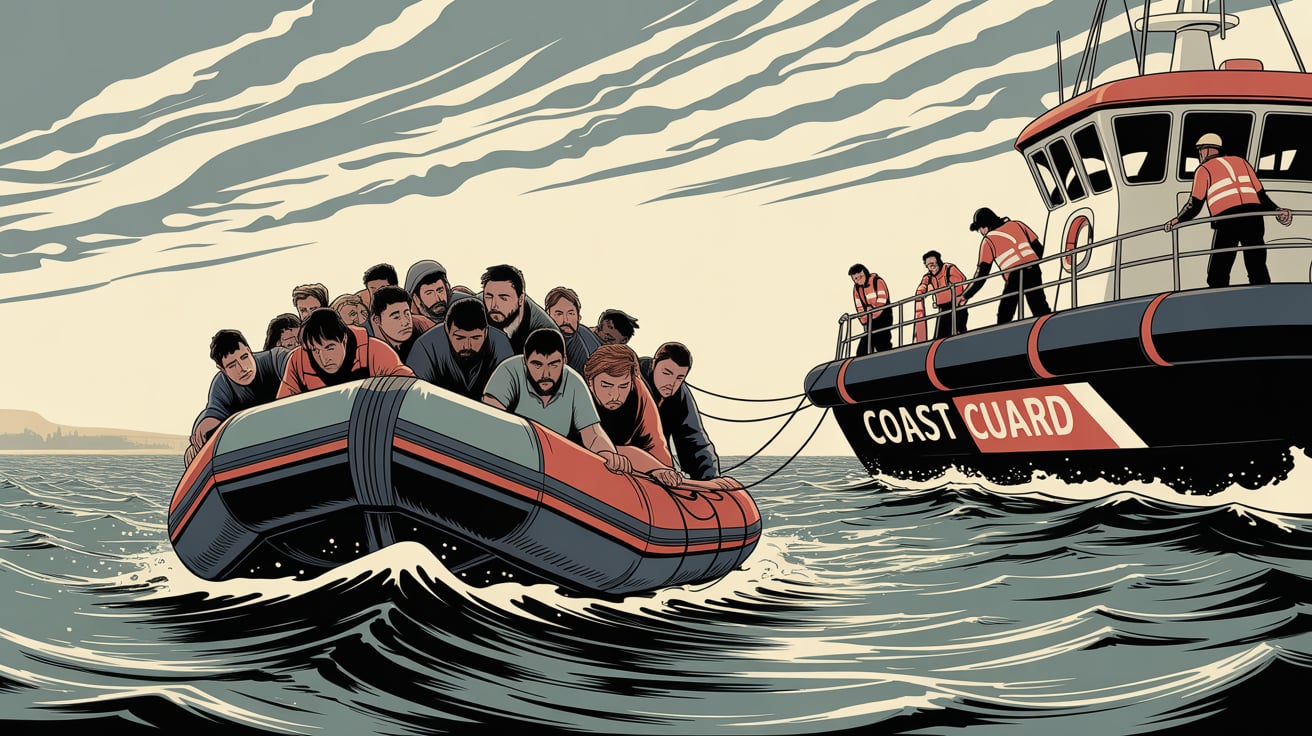
Every nation has the right—and the responsibility—to secure its borders and safeguard the lives of those within them. In the UK, we are confronting a growing challenge: the rise in small boat crossings across the English Channel. These perilous journeys not only endanger lives but also compromise national security and strain public resources.
The dangers posed by illegal Channel crossings are well documented. Small, overcrowded vessels, often unseaworthy, are launched by criminal gangs who view human lives as mere commodities. These ruthless people-smugglers care nothing for the safety of the men, women, and children they exploit. Their only motivation is profit. Every crossing represents a calculated risk that could end in tragedy.
That’s why this government is committed to ending illegal small boat crossings. Our approach is firm but fair—driven by compassion for the vulnerable and a clear understanding that unchecked illegal migration undermines the integrity of the asylum system. To protect lives and ensure public confidence in our immigration controls, we are taking bold, coordinated action both at home and abroad.
A Comprehensive Strategy to Dismantle Smuggling Networks
The core of our strategy is focused on one goal: dismantling the criminal networks behind illegal migration. These international syndicates are highly organized, adaptable, and ruthless. Tackling them requires an equally sophisticated response—one that combines intelligence sharing, law enforcement collaboration, and legislative reform.
Our newly established Border Security Command represents a major step forward. This multi-agency task force brings together experts from across government, law enforcement, and intelligence agencies. Its mission is clear: to identify, track, and disrupt smuggling operations before boats even reach the water.
We are enhancing international partnerships to improve the flow of intelligence and bolster cross-border enforcement. By collaborating closely with European allies—particularly France—we’re gaining a clearer picture of the smuggling routes and tactics in use. This intelligence is then used to inform coordinated operations that strike at the heart of these criminal enterprises.
Key Measures to Strengthen Border Security
Our commitment to ending illegal crossings is not just rhetoric—it is backed by real, tangible action on the ground. The Home Secretary recently became the first UK Home Secretary in five years to visit France’s northern coastline—a critical staging ground for many Channel crossings. This visit led to a historic agreement between British and French authorities to intensify joint efforts against people smuggling.
Here are some of the key actions being implemented as a result:
1. Expansion of Aerial Surveillance
To detect and disrupt small boat launches more effectively, we are investing in aerial surveillance capabilities. This includes training a new cohort of drone pilots who will operate advanced surveillance drones along the French coastline. These eyes in the sky provide real-time intelligence, allowing law enforcement teams to respond quickly and prevent launches before they occur.
2. Policy Reform for Rapid Maritime Intervention
We are pressing the French government to introduce urgent policy reforms that would allow maritime enforcement teams to intervene more quickly in shallow coastal waters. These areas are frequently used by smugglers as launch points due to their proximity to the UK. Current French laws limit maritime enforcement in these zones, creating a window of opportunity for criminal gangs. By removing legal barriers to swift intervention, we can cut off crossings at their source.
3. Creation of a New Elite Patrol Unit
A specially trained patrol unit is being established to bolster law enforcement presence along northern France’s coastline. This unit is modeled on the highly successful security operations deployed during the Paris Olympics, which led to a sharp drop in smuggling attempts. The patrols will use rapid deployment tactics, thermal imaging technology, and advanced coordination to intercept smugglers and migrants before boats are launched.
4. Establishment of a Specialist Intelligence Hub in Dunkirk
In another significant move, we are setting up a dedicated intelligence unit based in Dunkirk. This unit will focus exclusively on identifying and dismantling smuggling networks operating in the region. Crucially, it will have dual investigative and prosecutorial powers, enabling faster arrests and expedited prosecutions of key figures in the criminal underworld. This fusion of intelligence and enforcement will be vital in breaking up smuggling cells before they can cause harm.

Tougher Laws for Tougher Challenges
Domestically, we are bolstering our legal framework to ensure that those involved in illegal migration—whether as perpetrators or facilitators—face real consequences.
The Border Security, Asylum and Immigration Bill, currently progressing through Parliament, introduces a suite of new powers and penalties. It enhances the ability of law enforcement to detain, prosecute, and deport individuals who enter the UK illegally. It also cracks down on those who aid and abet illegal entry—whether by providing transport, false documents, or housing.
Among the most significant provisions of the Bill are:
- Increased Sentencing Powers for people-smuggling offences, sending a clear message that the UK will not tolerate this exploitation.
- Expanded Stop-and-Search Powers at key ports and entry points to detect smuggling activity and gather evidence.
- Faster Asylum Processing and Removal Mechanisms, ensuring that those without a legitimate claim to stay are removed swiftly, while those in genuine need are protected.
Together, these measures form a cohesive legal and operational framework to manage migration responsibly, uphold national security, and protect the integrity of our borders.
Reinforcing International Cooperation
The fight against illegal migration cannot be won in isolation. It requires deep and sustained international cooperation. That’s why we are working closely with our European partners to share intelligence, coordinate law enforcement, and align border security practices.
Our bilateral relationship with France is central to this effort. The recent agreement signed during the Home Secretary’s visit marks a new chapter in UK-France cooperation on migration. This is not a one-off event—it is part of a broader strategy to ensure our two nations remain united in the face of a common threat.
Beyond France, we are also engaging with other European countries to tackle the broader smuggling routes that extend from the Middle East and North Africa through to northern Europe. By addressing the problem at its root—long before it reaches the Channel—we can deliver a more effective and sustainable solution.
Compassionate, Controlled Migration
As we take firm steps to stop illegal crossings, we are also expanding legal, safe, and managed routes for those in genuine need of refuge. This dual approach—robust border enforcement alongside compassionate humanitarian action—is central to our values.
The UK continues to welcome thousands of refugees and asylum seekers through schemes such as:

- The UK Resettlement Scheme, which brings vulnerable individuals directly from conflict zones to safety.
- Family Reunification Pathways, allowing close relatives to join those already granted asylum in the UK.
- Community Sponsorship Initiatives, where local groups can support refugee families as they rebuild their lives.
By providing lawful routes to protection, we reduce the incentive for individuals to turn to dangerous and illegal alternatives.
A Unified National Effort
Ending dangerous Channel crossings is not a task for government alone—it requires a unified national effort. Communities, charities, law enforcement agencies, and international partners all have a role to play.
We call on the public to remain vigilant, report suspicious activity, and support efforts to raise awareness of the risks of illegal migration. We urge technology companies to clamp down on online platforms used by smugglers to recruit and mislead vulnerable individuals. And we invite local authorities and communities to work with us in creating safe and sustainable pathways for legal migration.
Conclusion: A Safer Future for All
The government’s commitment to ending illegal small boat crossings is unwavering. Through enhanced surveillance, tougher laws, and stronger partnerships, we are building a system that is fair, firm, and focused on results.
Our goal is simple but vital: to save lives, secure borders, and restore trust in our immigration system. Every step we take brings us closer to a future where vulnerable people are no longer exploited by traffickers, and where Britain’s borders are protected from criminal exploitation.


One thought on “Latest statement in response to small boat crossings”